

Preparing the right documents is one of the most important parts of a successful tourist visa application. Whether you are planning a holiday, visiting friends or family, or taking a short international trip, your documents should clearly support your travel purpose, financial situation, and intention to follow the visa conditions.
The exact requirements vary by country, but knowing how to prepare documents for a tourist visa can help you avoid common mistakes, delays, and unnecessary complications.
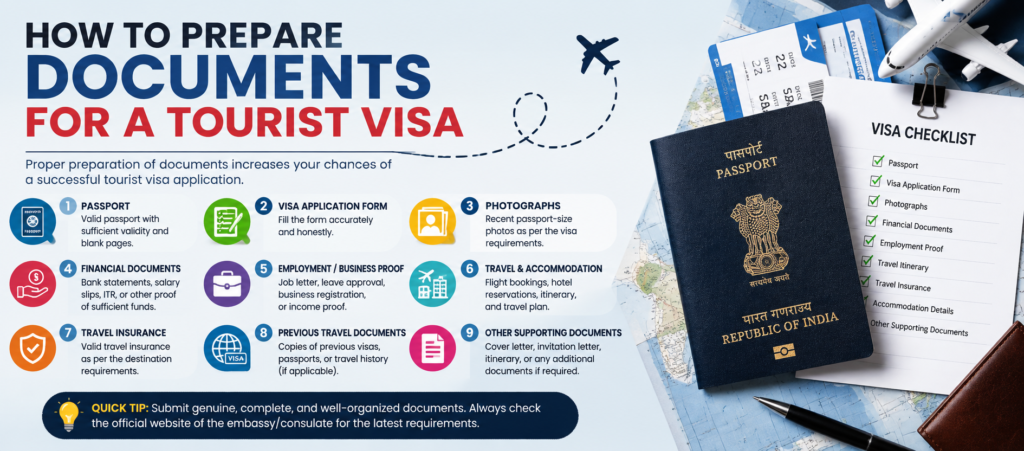
1. Check the Official Visa Requirements
Before collecting documents, check the latest requirements provided by the embassy, consulate, immigration authority, or official visa application portal of your destination country.
Do not rely only on old checklists or information from social media because visa rules can change. Requirements may also differ depending on your nationality, travel purpose, age, employment status, and type of tourist visa.
Create a document checklist based specifically on your destination and circumstances.
2. Keep Your Passport Ready
A valid passport is generally the most important document for international travel. Check its validity before starting your application.
Some countries require your passport to remain valid for a certain period after your planned trip and may require available blank pages. You may also need copies of previous passports or previous visas, depending on the destination.
Make sure your personal information is clearly visible and matches the information entered in your visa application.
3. Complete the Visa Application Form Carefully
The visa application form should be completed accurately and consistently. Information such as your name, date of birth, passport number, employment details, travel dates, accommodation, and previous travel history should match your supporting documents.
Avoid guessing information or leaving important sections incomplete. If you make an error, follow the official procedure for correcting it rather than submitting contradictory information.
4. Prepare Financial Documents
Financial documents help demonstrate that you can reasonably afford your planned trip.
Depending on the destination, you may be asked to provide recent bank statements, salary slips, income-tax documents, employment records, business documents, or other evidence of funds.
Your financial documents should be genuine and reflect your actual financial circumstances. Avoid unexplained large deposits made shortly before submitting the application, as these may raise questions about the source of funds.
5. Provide Employment or Business Proof
Your professional status can be an important part of your application.
If you are employed, you may provide an employment letter, salary slips, approved leave letter, or other relevant employment documents. Self-employed applicants may provide business registration documents, tax records, or other appropriate evidence of business activity.
Students may need to provide enrolment or educational documents where applicable.
The documents should clearly support the information provided in your application.
6. Prepare Travel and Accommodation Details
Tourist visa applicants are commonly asked to provide information about their proposed trip. Depending on the destination, this may include a travel itinerary, accommodation details, flight reservation, hotel booking, or invitation letter from a host.
Your itinerary should be realistic and consistent with your stated travel purpose.
For example, if you are applying for a short holiday, your planned duration, accommodation, and activities should make sense together.
7. Arrange Travel Insurance if Required
Some destinations require travellers to have travel medical insurance. This is particularly relevant for certain visa categories and destinations with specific insurance requirements.
If insurance is mandatory, check the required coverage, validity period, and geographical area before purchasing the policy.
8. Prepare Previous Travel and Visa Documents
If applicable, include copies of previous visas, residence permits, entry and exit stamps, or previous passports requested by the relevant visa authority.
A previous travel history can provide useful information about your compliance with immigration rules, although the importance of travel history varies by destination.
Never hide relevant immigration or visa information when the application asks for it.
9. Check Document Format and Translation Requirements
Some visa authorities require documents to be submitted in a particular format. Documents that are not in the required language may need an official or certified translation.
Check whether documents need to be originals, photocopies, scanned files, certified copies, or uploaded in specific file formats.
Photographs should also meet the destination’s specified size, background, and quality requirements.
10. Organise Your Documents Properly
Once all documents are collected, organise them according to the official checklist. Keep digital copies of important documents in a secure location.
Before submission, check:
- Passport validity
- Application form accuracy
- Photograph specifications
- Bank and financial documents
- Employment or business proof
- Accommodation details
- Travel itinerary
- Insurance, if required
- Previous visa information
- Required translations
- Appointment confirmation and receipts
A well-organised application makes it easier to identify missing or inconsistent information.
Common Mistakes to Avoid
Applicants should avoid submitting incomplete documents, false information, altered bank statements, fake bookings, or inconsistent details. Providing fraudulent or misleading information can seriously affect a visa application.
Another common mistake is preparing documents based on someone else’s application without checking the specific requirements of the destination. Every applicant’s circumstances can be different.
Conclusion
Knowing how to prepare documents for a tourist visa can make the application process more organised and reduce avoidable errors. Start by checking the official requirements, then prepare your passport, application form, financial evidence, employment or business documents, travel details, accommodation information, and any additional documents required by the destination.
Most importantly, all information and supporting documents should be genuine, accurate, and consistent. Proper documentation does not guarantee visa approval because the final decision rests with the relevant immigration or visa authority, but careful preparation can help you present your application clearly and professionally.