

Applying for an Australian visa can be stressful, especially when you are unsure whether your application provides enough evidence to satisfy the visa requirements. Understanding the common Australia Visa Refusal Reasons can help applicants identify potential weaknesses and prepare a more complete application.
Australian visa applications are assessed according to the requirements of the relevant visa subclass. For visitor visas, applicants generally need to demonstrate that they are genuine visitors, have sufficient funds for their stay and departure, and meet applicable health and character requirements.
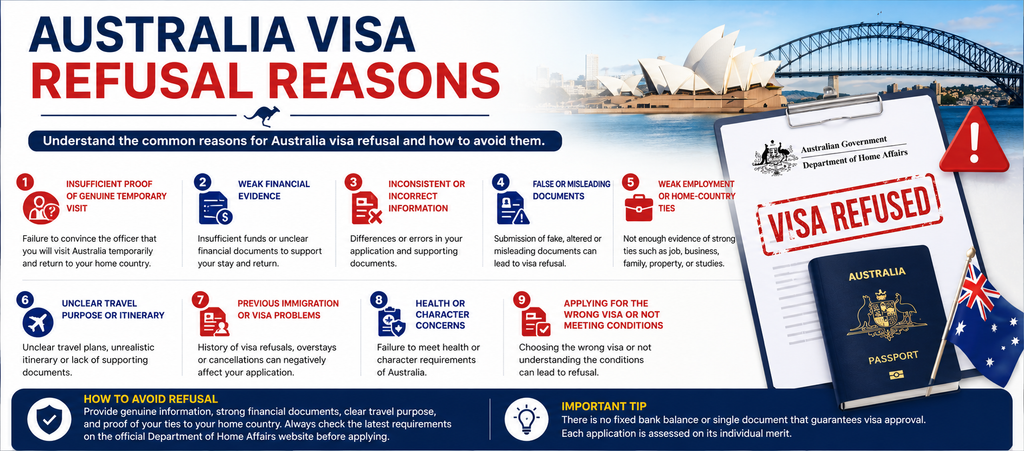
1. Insufficient Proof of Genuine Temporary Visit
One of the major reasons a visitor visa application may be refused is that the applicant has not sufficiently demonstrated that they genuinely intend to stay in Australia temporarily.
For example, an applicant may have limited evidence showing why they need to return to their home country. Immigration authorities may consider circumstances such as employment, education, immediate family, property, and other commitments when assessing the applicant’s situation.
Providing a clear travel purpose and supporting evidence can make the application more understandable.
2. Weak Financial Evidence
Applicants need to demonstrate that they have, or have access to, enough money to support themselves during their stay and leave Australia at the end of the visit.
Weak or inconsistent financial evidence can create concerns. Examples may include:
- Insufficient funds for the proposed trip
- Unexplained large deposits
- Bank statements that do not match declared income
- Inconsistent salary information
- Lack of evidence from a sponsor who claims to be financially supporting the applicant
Australian immigration guidance gives examples of evidence such as personal bank statements, payslips, tax records, audited accounts, term deposits and credit-card statements.
3. Inconsistent or Incorrect Information
Providing incorrect information in a visa application can seriously affect the outcome. Differences between the application form, passport, financial documents, employment records, previous visa applications, or travel history may raise concerns.
Applicants should carefully check names, dates, employment details, travel history, family information and other important information before submitting the application.
Australian Home Affairs states that applicants must provide genuine, verifiable and unaltered documents and accurate information.
4. False or Misleading Documents
Submitting fake, altered, digitally manipulated, or misleading documents is a serious matter. Documents provided to support an Australian visa application should be genuine and verifiable.
Examples could include manipulated bank statements, fake employment letters, altered certificates, or misleading information about previous travel or immigration history.
False or misleading information may result in visa refusal and can have additional consequences, including visa cancellation or restrictions on future applications.
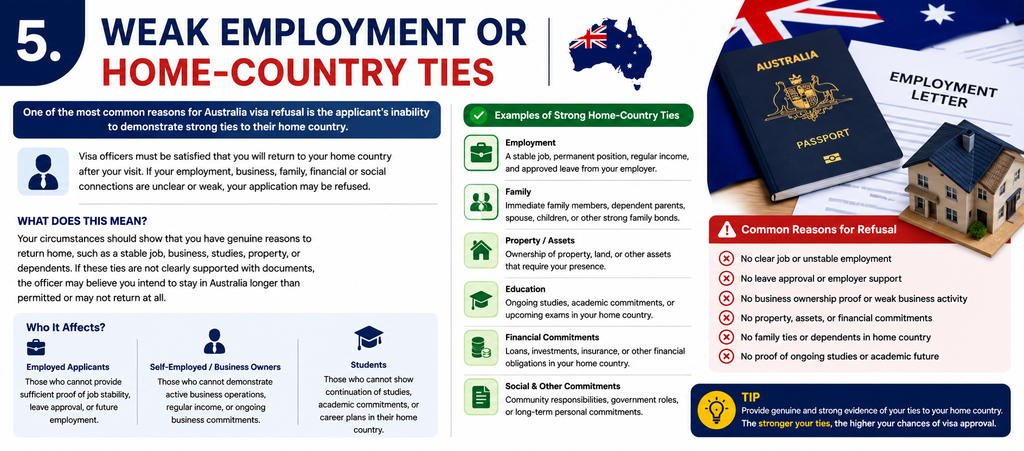
5. Weak Employment or Home-Country Ties
Applicants may have difficulty demonstrating that they have strong reasons to return home after their proposed visit.
Evidence may include an employer’s letter confirming employment and approved leave, proof of ongoing studies, evidence of immediate family responsibilities, property ownership, or other relevant commitments.
The important point is not simply to provide documents but to ensure they genuinely reflect the applicant’s circumstances.
6. Unclear Travel Purpose or Itinerary
An application may be weakened when the proposed trip does not have a clear or credible purpose. For example, the applicant may provide limited information about where they will stay, what they intend to do, how long they plan to remain in Australia, or who they intend to visit.
A realistic itinerary, accommodation information, invitation letter where relevant, and a clear explanation of the purpose of travel can help present a consistent application.
7. Previous Immigration or Visa Problems
Previous visa refusals, overstays, cancellations, or immigration issues may be relevant to an application. Applicants should not hide previous immigration history. Instead, they should provide accurate information and explain relevant circumstances where appropriate.
Failure to disclose required information can create additional concerns about the applicant’s credibility.
8. Health or Character Concerns
Australia has health and character requirements that applicants may need to satisfy. Depending on the visa and individual circumstances, health examinations or police certificates may be required.
Applicants may be unable to meet the visa requirements if they do not satisfy applicable health or character criteria.
9. Applying for the Wrong Visa or Not Meeting Visa Conditions
Another potential issue is selecting a visa that does not match the applicant’s actual purpose of travel. For example, a visitor visa is intended for temporary visits and does not permit general employment.
Applicants should carefully check the requirements and conditions of their particular visa subclass before applying.
How to Avoid Australia Visa Refusal
Before submitting an application, applicants should review their documents carefully and make sure that their information is accurate, consistent, and supported by genuine evidence. Financial documents should reflect the applicant’s actual financial circumstances, while employment, family, education, and travel documents should support the stated purpose of the visit.
There is no single document or fixed bank balance that guarantees an Australian visa approval. Each application is assessed according to the applicable requirements and the applicant’s individual circumstances.
If your Australia visa was refused, read the refusal notification carefully to understand the reasons for the decision and determine whether you may be able to apply again or have another available option. Always check the latest requirements from the official Australian Department of Home Affairs before submitting a new application.
SEO Details
Focus Keyword: Australia Visa Refusal Reasons
SEO Title: Australia Visa Refusal Reasons – Common Reasons & How to Avoid
Meta Description: Learn the common Australia visa refusal reasons, including weak finances, unclear travel purpose, insufficient home ties, incorrect information and missing documents.
Secondary Keywords:
- Australia visa refusal reasons
- reasons for Australia visa refusal
- Australia tourist visa refusal reasons
- Australia visitor visa refusal
- Australia visa rejected
- Australia visa refusal
- Australia visa rejection reasons
- why Australia visa gets refused
- Australia tourist visa rejection reasons
- Australia visa refusal from India