

Receiving a tourist visa refusal can be disappointing, especially when you have already made travel plans and prepared your documents. However, a visa refusal does not necessarily mean that you can never visit the destination country. The appropriate next step depends on the reason for refusal, the country’s immigration rules, and the options available to you.
If you are wondering what to do if your tourist visa is refused, the most important thing is to understand the refusal before deciding whether to reapply.
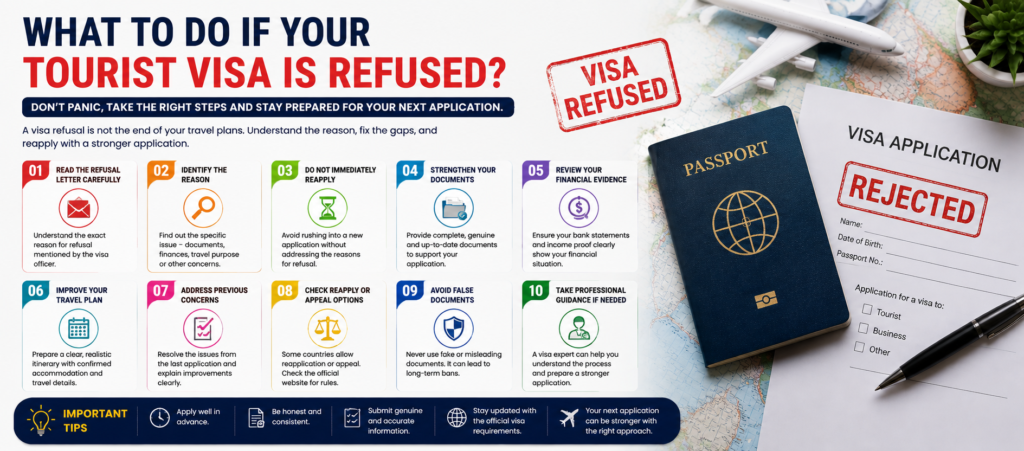
1. Read the Visa Refusal Letter Carefully
The first step after receiving a refusal is to carefully review the official refusal letter or notification. It may explain the reasons why the visa officer was not satisfied with your application.
The refusal may relate to financial evidence, travel purpose, supporting documents, previous immigration history, or concerns about your circumstances.
Understanding the specific reason is important because simply submitting the same application again may not resolve the issue.
2. Identify the Reason for Refusal
Tourist visas can be refused for different reasons. Common issues may include insufficient financial evidence, incomplete documentation, inconsistent information, unclear travel plans, or concerns about whether the applicant will leave the destination after the authorised stay.
In some cases, the visa officer may not be satisfied that the applicant has provided enough evidence to support the purpose of the trip.
Identify exactly what concern applies to your case and determine whether you can provide stronger or additional evidence.
3. Do Not Panic or Immediately Reapply
A common mistake is to submit another application immediately without making any meaningful changes.
Before reapplying, take time to review your previous application and refusal notice. Determine what information or documentation needs improvement.
If your circumstances have not changed and you cannot address the refusal reason, submitting an identical application may not be useful.
4. Strengthen Your Supporting Documents
If the refusal was related to documentation, prepare stronger and more relevant evidence for your next application.
Depending on your circumstances and destination, this could include updated bank statements, employment documents, approved leave information, business records, accommodation details, or a clearer travel itinerary.
All documents must be genuine and should accurately represent your current circumstances.
5. Review Your Financial Evidence
Financial concerns are sometimes an important part of tourist visa decisions. If your previous application did not clearly demonstrate your ability to pay for the trip, review your financial documents carefully.
Your bank statements and income documents should provide a realistic picture of your financial position. Avoid unexplained deposits or transactions that cannot be supported by genuine evidence.
Do not borrow money temporarily or create artificial financial records simply to make your application appear stronger.
6. Improve Your Travel Plan
A clear and realistic travel plan can help explain the purpose of your proposed visit.
Review your intended dates, accommodation, destinations, and activities. Your itinerary should be reasonable for the length of your trip and consistent with the information provided in your application.
If you are visiting friends or relatives, provide the relevant information and supporting documents when required.
7. Address Previous Refusal Reasons
If you decide to apply again, make sure the new application addresses the concerns identified in the previous refusal.
For example, if the previous application lacked sufficient financial evidence, provide appropriate updated evidence. If the purpose of travel was unclear, make your itinerary and explanation more precise.
A new application should demonstrate what has changed or what additional evidence now supports your circumstances.
8. Consider Whether You Can Reapply or Appeal
The options after a tourist visa refusal vary by country. Some destinations may allow applicants to reapply, while certain visa systems may provide review or appeal procedures in specific circumstances.
Check the refusal notice and the official immigration or embassy website to determine which options are available to you.
Do not assume that an appeal or reapplication is automatically available for every tourist visa category.
9. Avoid False Documents
Never attempt to overcome a refusal by submitting fake bank statements, employment letters, hotel bookings, invitation letters, or other fraudulent documents.
Providing false or misleading information can have serious consequences and may negatively affect future visa applications.
If you do not have a particular document, check whether the relevant visa authority accepts alternative evidence.
10. Take Professional Visa Assistance if Needed
If you are unsure why your tourist visa was refused or how to prepare a new application, professional visa assistance may help you understand the documentation and application process.
A qualified consultant can help review your documents, identify inconsistencies, and organise your application. However, no visa consultant can guarantee approval because the final decision rests with the relevant embassy, consulate, or immigration authority.
Can You Apply Again After a Tourist Visa Refusal?
In many situations, applicants may be able to submit a new application, but the rules depend on the destination country and visa category. Before reapplying, make sure you understand the previous refusal and have a legitimate basis for submitting a stronger application.
Avoid changing information simply to make your application look better. Any information provided should be truthful and supported by genuine documents.
Conclusion
Knowing what to do if your tourist visa is refused can help you make a more informed decision about your next step. Start by reviewing the refusal letter, identifying the concerns, and checking whether you can address them with genuine and relevant evidence.
Do not rush into submitting another identical application. Instead, carefully review your financial documents, travel plans, employment or business evidence, and other supporting documents. If reapplication or another review process is permitted, follow the official procedure.
A visa refusal is not necessarily the end of your travel plans. With careful preparation, accurate information, and a clear understanding of the refusal reasons, you can determine the most appropriate option for your circumstances.